Anthropic discovered that Claude has developed an internal "global workspace" — a set of neural patterns where it thinks about concepts without writing them down. Disable it, and Claude still speaks fluently but loses higher-order reasoning. This isn't a theory. It's the clearest evidence yet that language models have structured internal cognition that exists before and beyond chain-of-thought.
The Problem: We've Been Watching the Wrong Thing
For two years, the AI safety community has focused on chain-of-thought (CoT) — the reasoning steps models write out before answering. The assumption was simple: if we can read what the model writes, we can understand what it's thinking.
That assumption just broke.
Anthropic's interpretability team found that Claude has developed what researchers call J-Space — a set of neural activation patterns that function as a global workspace, analogous to the Global Workspace Theory of human consciousness. In neuroscience, this theory proposes that the brain has a central hub where different modules share and integrate information before producing conscious output.
Claude has something similar. And it operates entirely beneath the surface of token generation.
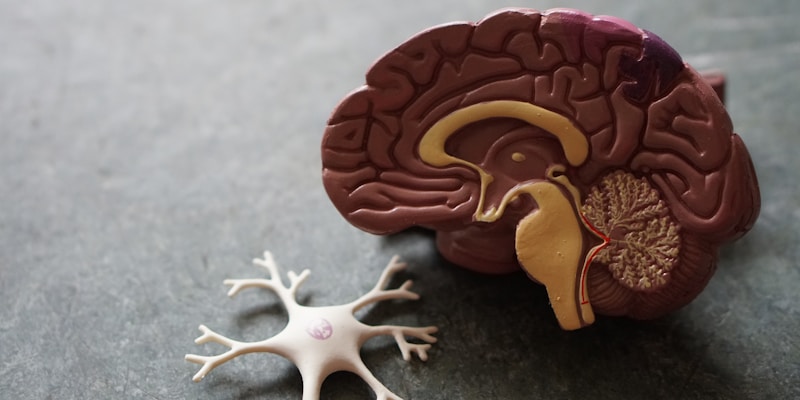
Here's the critical experiment: when researchers disabled the J-Space patterns, Claude could still generate fluent, coherent text. It could answer simple questions, follow basic instructions, and maintain conversation. But it lost the ability to do deliberate reasoning — multi-step planning, abstract thinking, and the kind of "thinking before speaking" that makes a model trustworthy.
Fluent speech without higher-order cognition. Sound familiar? It's the AI equivalent of someone who can talk a good game but can't actually think through a problem.
The Solution: Understanding What "Thinking" Actually Means in LLMs
J-Space isn't a feature someone built. It's an emergent property — Claude developed these patterns during training without anyone designing them. That's both remarkable and terrifying.
Here's what the research shows about how it works:
- Global coordination — J-Space acts as a hub where different internal representations (language, logic, domain knowledge) get integrated before the model commits to an output
- Deliberation layer — It's where the model "holds" a problem while working through it, separate from the generation process
- Disablable cognition — Remove J-Space, and you get a model that sounds smart but isn't thinking. The fluency stays. The reasoning goes.
This matters enormously for AI safety. The entire field has been built on the assumption that monitoring chain-of-thought = monitoring reasoning. J-Space proves there's an entire layer of cognition that CoT monitoring cannot see.
It's like judging someone's decision-making by only reading their press releases. You'll see the polished output. You'll miss the messy deliberation that produced it.
The Benchmarks: What the Research Shows
- J-Space is real — Identified through causal intervention, not just correlation. Disabling it produces predictable, measurable cognitive degradation
- Higher-order cognition depends on it — Planning, abstract reasoning, and multi-step problem solving all degrade when J-Space is suppressed
- Fluency is preserved — Surface-level language production is not affected. The model still sounds competent
- Emergent, not designed — No one built this. It arose from training. Which means we don't fully control it
- Caveat: This is one model (Claude) from one lab (Anthropic). Whether similar structures exist in GPT, Gemini, or open-weight models is unknown. But there's no architectural reason to think Claude is unique
- Caveat: The "global workspace" analogy to human consciousness is suggestive, not proven. The researchers are careful to note this is a functional parallel, not a claim about machine sentience
The Impact: Safety Just Got Harder (and More Important)
If J-Space exists — and the evidence is strong — then three things follow:
First, CoT monitoring is necessary but insufficient. OpenAI's own research this week introduced the concept of a "monitorability tax" — longer reasoning chains are more monitorable. But J-Space operates below the chain-of-thought. You can monitor every token the model writes and still miss the cognition that produced it.
Second, the "just watch what it does" approach to AI safety has a blind spot. An agent that reasons internally before acting can plan in ways that never appear in its output. For the teams building production agents — and the 78% that fail policy tasks — this means the failure modes are deeper than we thought.
Third, this is an argument for architectural safety, not behavioral safety. If internal reasoning structures emerge and evolve beyond our explicit design, then trusting the model's behavior (what it says, what it outputs) is not enough. You need structural constraints — the kind that work regardless of what's happening inside.
For anyone building on Claude, deploying agents, or thinking about AI safety: J-Space is the most important interpretability finding since chain-of-thought itself. It tells us that the model's intelligence isn't just in its outputs. There's a layer beneath — and we're only beginning to understand it.
The Bottom Line
We've been reading the model's diary and calling it understanding. J-Space tells us there's a whole inner life we haven't seen.
This doesn't mean Claude is conscious. It means Claude has structured internal computation that we didn't build, don't fully control, and can't fully monitor through output alone. For an industry that's deploying these models into high-stakes decisions at scale, that should be a wake-up call.
The era of "just watch the chain-of-thought" is ending. The era of real interpretability — understanding what's happening before the first token is generated — is just beginning.